
Outstanding Warrants in Smith County
Smith County publishes no online name search or warrant list, so the warrant check runs through people. Call the Sheriff at 601-782-4531 first, figure out which court likely issued the process, and then press that court for a current answer. Staff can hold back details over the phone. Justice Court, at 601-782-4334, takes questions on lower-court criminal cases, traffic citations, and hearing dates. For Circuit matters, the Circuit Clerk sits at 601-782-4751. A municipal case belongs to its own city clerk unless that office sends you somewhere else. No single call settles every outstanding warrant in Smith County, so work each court in turn.
Smith County Active Status Gaps
Smith County posts no active-warrant list, no roster fields, and no update date anywhere local. That shapes the whole plan: call the Sheriff, pin down the issuing court, and ask its clerk for a current status rather than hunting a list that does not exist. The statewide DPS most-wanted program picks names for public safety reasons. It is not a stand-in for every active process in Smith County. For dockets, the PAMEC registration page spells out how account access to participating courts works.
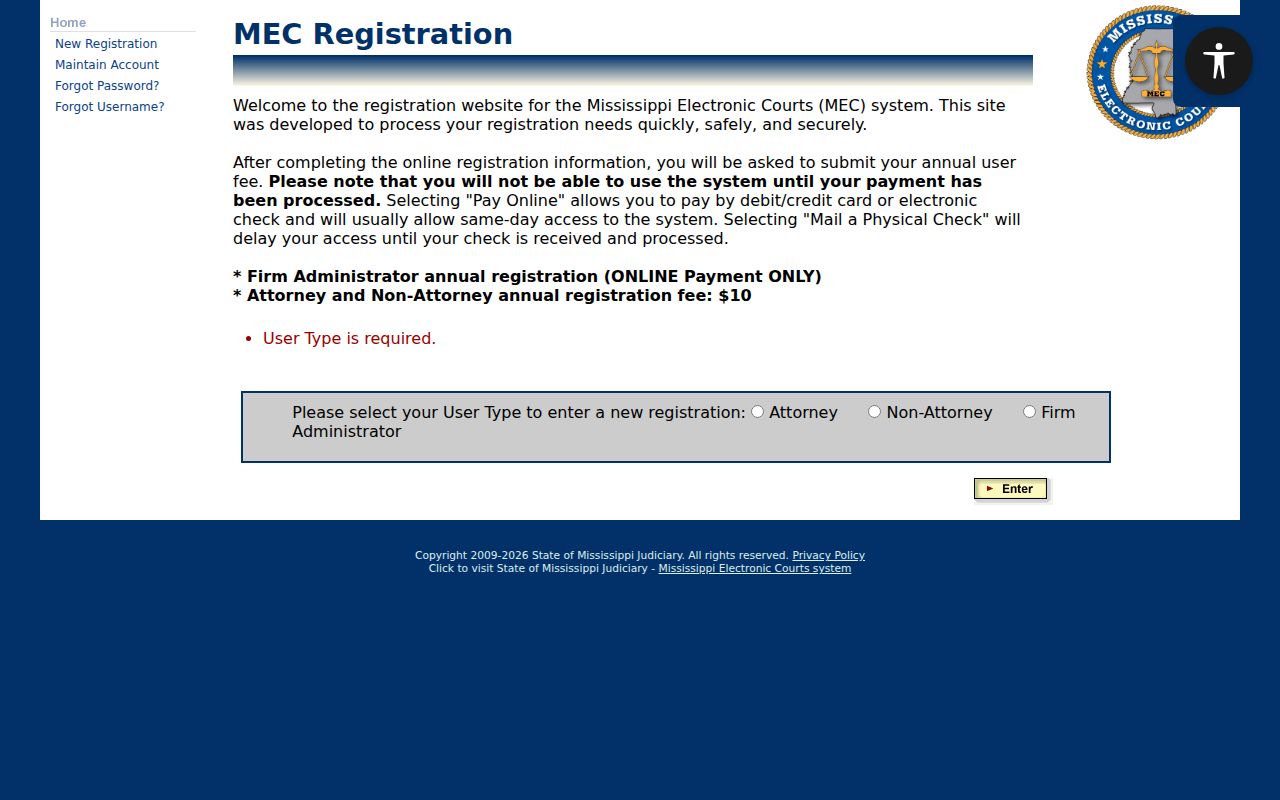
The image shows why an account-based docket source differs from a free Sheriff roster.
The Smith County Active Warrant List
Gather the details before any warrant lookup in Smith County: full legal name, case or citation number, court date, municipality, and issuing agency. Give a birth date only if an office asks for it to confirm identity. Then write down each office, its instructions, any deadline, and the document that proves a status change.
Note: official court information
Smith County Active Warrant List Absence
Smith County has no warrant roster, so nothing exists to describe: no update cycle, no results table, no rule for who gets listed. A warrant check here still runs through the court and the Sheriff.
Smith County Active Warrants: What They Show
A court record may show the case number, the charge or citation, the issuing judge or court, the date, and the process status. Bond and fine amounts shift over time. The clerk or Sheriff must confirm the current figure, and whether an appearance, payment, bond, or attorney filing is required.
| Warrant Number | The court case or process number; Smith County publishes no universal format. |
|---|---|
| Charge / Offense | The official file entry and current clerk explanation. |
| Issuing Court | The official file entry and current clerk explanation. |
| Bond Amount | The official file entry and current clerk explanation. |
| Status | official court information |
Smith County Outstanding Warrant Terms
In Smith County files, active and outstanding generally mean process not yet served or recalled. Returned, capias pending, sealed, and expunged are different labels, and their meaning lives in the court file itself.
Smith County Warrant Roundups
PAMEC sells access to participating Mississippi Electronic Courts records, including Thirteenth Circuit dockets. It is not a free statewide warrant lookup. Labels like Bench Warrant Issued or Capias Pending need the Circuit Clerk to explain them before you rely on what they seem to say in a Smith County docket.
Key Point: Mississippi DPS publishes a curated statewide program, while Smith County has no local roster. Mississippi DPS Most Wanted program.
official court information
Smith County Warrant Records Can Change
Warrant records move. A judge recalls process, an officer returns it, a clerk updates the docket. So write down the date and office of any confirmation instead of trusting an old web result.
Finding Your Smith County Warrant Entry
The Mississippi Public Records Act opens nonexempt records to the public, but sealed, expunged, juvenile, investigative, and safety-sensitive material may stay closed. A narrow records request in Smith County suits procedures or aggregate data. It is no tool for urgent personal warrant confirmation.
Important: official court information
Smith County Warrant Resolution Routes
Resolving a Smith County warrant can mean counsel-assisted contact, an appearance, bond, payment where authorized, or a motion to recall. Only the issuing court can say which route fits.